UM/UIM Coverage: A DMV Rider's Real Backstop Against Uninsured Drivers
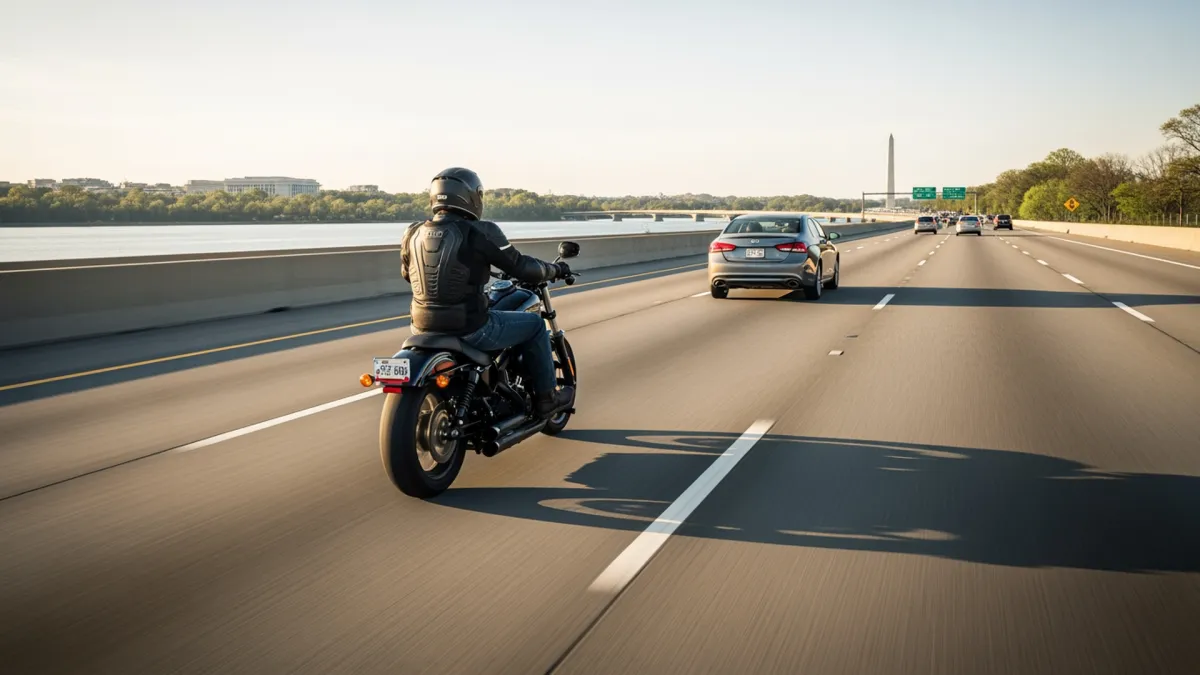
You can be the most careful rider on the George Washington Parkway and still get hit by someone who never should have been on the road. In the DMV, plenty of those drivers are carrying nothing, or close to nothing. When that happens, the question stops being who was at fault and becomes where the money to fix you actually comes from. For a motorcyclist, the answer is usually your own uninsured and underinsured motorist coverage.
What UM and UIM Coverage Do
Uninsured motorist coverage, or UM, pays for your injuries when the driver who caused the crash has no liability insurance at all. Underinsured motorist coverage, or UIM, fills the gap when the at-fault driver does have insurance but their limits are too low to cover what you actually lost. Both are coverages that ride on your own policy, so they protect you no matter whose fault the crash was, as long as you can show the other driver was responsible.
For a rider, that protection is not a luxury. A serious motorcycle crash routinely produces medical bills, surgeries, and lost income that blow past the low minimum limits the average driver carries. When that happens, UM/UIM is often the only place left to turn.
The Minimums Are Low, and That Is the Problem
Look at what the DMV requires drivers to carry. Those first two numbers are the most anyone is guaranteed to have for your injuries, and they are not much.
- ✓ Maryland requires 30/60/15. Up to 30,000 dollars per person and 60,000 dollars per crash for injuries, with 15,000 dollars for property damage.
- ✓ Washington DC requires 25/50/10. Just 25,000 dollars per person and 50,000 dollars per crash, the lowest injury floor of the three.
- ✓ Virginia requires 30/60/20. 30,000 dollars per person and 60,000 dollars per crash for injuries, with 20,000 dollars for property.
- ✓ A single ride in an ambulance can eat that up. One surgery after a Beltway wreck can exceed 25,000 dollars before you have paid for anything else, which is how a minimally insured driver leaves you badly short.
Why All Three Require UM in the First Place
DC, Maryland, and Virginia all mandate uninsured motorist coverage precisely because so many drivers slip through the system. People let policies lapse. People drive on nothing. In a region where hundreds of thousands of cars cross jurisdiction lines every day, the odds that the person who hits you is uninsured or barely insured are real. The states responded by building UM into every policy so that an injured person is not left with nothing when the at-fault driver has nothing.
The catch is that the required minimums for UM often track those same low liability numbers. Carrying only the minimum UM means that if an uninsured driver puts you in the hospital, your own backstop may run out just as fast as the missing driver's would have.
How Riders Should Think About Their Own Policy
The riders who come through a bad crash in decent financial shape are almost always the ones who bought more UM/UIM than the law required, long before they ever needed it. It is usually one of the most affordable coverages to raise, and for a motorcyclist it does the heaviest lifting.
- ✓ Pull out your declarations page. Find your UM and UIM limits specifically, not just your liability limits, and see what number is actually there.
- ✓ Do not assume the minimum is enough. For a rider, minimum UM can vanish in a single hospital stay. Higher limits are often a small increase in premium.
- ✓ Understand stacking and offsets. How UIM interacts with the at-fault driver's coverage varies by jurisdiction and policy, which is worth understanding before a crash, not after.
- ✓ Remember which state's rules apply. A DMV rider crosses jurisdiction lines constantly, and where the crash happened can affect how these coverages play out.
The Bottom Line for DMV Riders
In a region this crowded with minimally insured and uninsured drivers, UM/UIM is not a footnote on your policy. It is the coverage most likely to actually pay when a serious crash lands on you. The other driver's minimum limits may not come close to covering a real motorcycle injury, and if they have nothing, only your own coverage stands between you and the bill. Check your limits now, raise them if they are thin, and get a knowledgeable set of eyes on any serious crash so every layer of coverage available to you is put to work.
This article is general information about DC, Maryland, and Virginia law and is not legal advice. Speak with a licensed attorney in the relevant jurisdiction about the specifics of your case.

Seann Malloy and the motorcycle accident lawyers in Washington DC metro at Malloy Law Firm represent riders hurt by negligent drivers. If you have questions after a crash, their team is here to help.